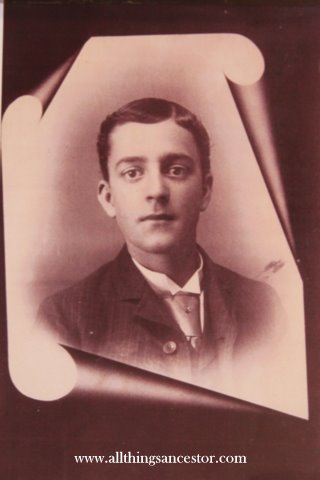
Alfred Henry Maiben 1874-1945 is the son of Henry Maiben and Flora Louisa Maddison Long Maiben. He is the brother of direct ancestor Flora Louise Maiben who married Nephi James Bates. This photograph was in the possession of Mildred Bates Watrous, daughter of Nephi and Flora Bates, who was Alfred’s niece.
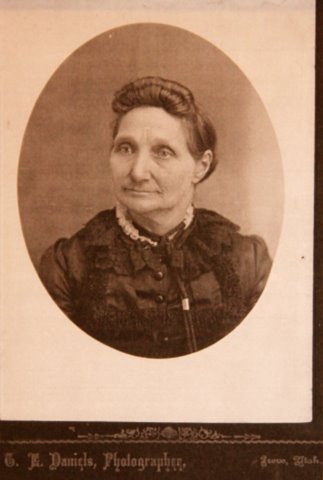
This photograph is from the collection of Julie Martin. She is most likely a descendant or connected family member to George Morris 1817-1897 and/or Hannah Maria Newberry 1823-1893. This portrait was taken in Utah.
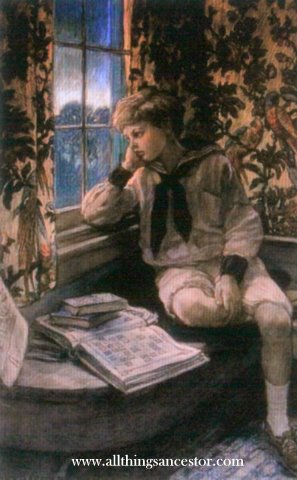
It used to be that keeping a journal or diary was a normal part of life. Generations did it. Young people began early to write in a journal, to fill it with pressed leaves and bugs. To collect stamps and notes between its lines. Living generations have ceased to have an interest in private, personal journals. Now, journals are kept for all to see and read on blogs. That means they are public journals. They are selective. Designed to show the best of the person. The best thoughts and the best smiles. They are not designed for introspection or expressions of gratitude or discussions of a religious nature. Usually. Private journals usually deal with those things. While it is being kept, a journal will be more honest if it is private. Journals keepers say that they re-read their journals to gain perspective.
If we are lucky enough to find an ancestor’s journal we have found gold. Journals of the past kept financial records. Kept track of cattle and horses and crops. Later journals included migrations and insights and activities. Many of our ancestors kept journals and wrote personal histories based on those journals. Journals are like autobiographies but more brief. I have read journals written by people who were not related to me and have loved them. Most the world’s greatest people, like John Adams, Winston Churchill and Wilford Woodruff kept journals – faithfully.
A journal or diary is an outline for a personal history. Brief statements in a journal can be expanded in a personal history. We think that we will remember things without writing them down but I have learned better. Over time memories fade, dates become confused, people’s names fade away and energy to keep track of everything wanes. Faithfully keeping a journal will insure that our posterity knows us since we will not have the chance to know most of our posterity in life.
I have a favorite journal which is now a book. It is the journal of Patty Bartlett Sessions. A Mormon pioneer midwife. When I first opened it’s cover, I thought that it would be hard to read. After all, Patty Sessions wrote entries in short, often misspelled statements such as “delivered her of a boy” “put her to bed with a daughter” “watched my peaches”. The first time I read it, I couldn’t put it down. It was so rich in history, in culture, in social interaction, in faith, providing insight into why people sacrifice and the heart and mind of a true pioneer. What if every family could read journals and diaries left by their ancestors? Just because it didn’t happen in most families, doesn’t mean it can’t happen in yours and mine.
Even a abbreviated journal is better than nothing. Even a diary which skips weeks and months and then starts again is better than nothing. These personal records will be like gold to those who come after us. Keep one.
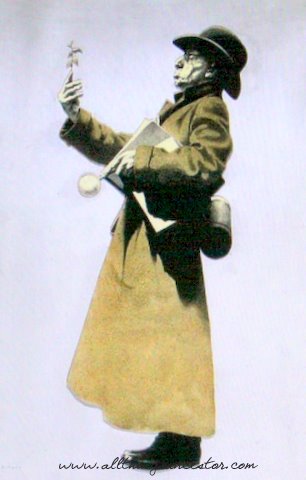
Most of the time we associate the word “artifact” with archeology. The definition is “a handmade object; such as a tool, or the remains of one, characteristic of an earlier time or cultural stage.” So, it would seem that our ancestors left artifacts behind without being prehistoric themselves. The emphasis in the definition is on that which was made by human hands. Artifacts which belonged to our ancestors which might be called “keepsakes” include clothing, tools, collections, art, leather, hinges, saddles and bridles, pots and pans, pottery, looms, sewing implements and a myriad of other things. A child of today might think of his grandfather’s manual typewriter as an artifact. It is. As this generation’s use of technology increases, the typewriter will be an old machine from an earlier time. Artifact and keepsake. Preserving the items that our ancestors used is a way of preserving the past and enlarging future generations’ view of that past.
Other examples to keep in mind are:
- Family Bibles
- Family Journals
- Sewing Implements such as thimbles and needles
- Furniture which was often handmade in earlier times
- Working tools: vice, hoe, rake, ax
- Kitchen tools: knives, bowls, pans
- Jewelry
- Lace, clothing, quilts, blankets
- Chests and anything carved or made from native woods in the area where the ancestors lived
- Things fashioned from various metals
- Anything no longer in common use
- Anything with an ancestor’s handwriting
- Painted portraits
- Compass
- Magnifying glass
- Eye glasses
- Hats
Here is one of the problems we all face when deciding what is an artifact and then, which artifacts qualify as keepsakes. Not everything can be kept. Some people find ways to display their keepsakes while others carefully store them away. It really doesn’t matter. What matters is to recognize the importance of saving a few keepsakes from ancestors which will remind us and our posterity about them and preserve the history of the time in which they lived. Not everything old from our ancestors’ lives is an artifact. Not all artifacts or belongings of an ancestor are keepsakes. Every generation will be different. Clothing and paper require some clever preservation techniques. Metal and leather will be fine unless the mice find the leather and water finds the metal. Portraits and art may be wonderful keepsakes but not necessarily the kind we want to hang in our home. Nevertheless, we want to be able to pull them out now and then and talk about them, especially if we remember the art or portraits hanging in an ancestor’s home.
Early ancestral Wills listed the property of the deceased. I have always thought that a Will was a good indicator of what was important and valued in the time when the ancestor lived. A feather bed. A pewter cup. A particular horse. A wagon. Land by a stream. A pocket watch. A gun. A knife.
Never give up. Unless the artifacts disappeared into thin air, which little can, they are still somewhere. I keep looking and asking. Meanwhile I give some thought to those things I treasure, which I have made with my own hands. Perhaps some of them will be tomorrow’s artifacts and keepsakes in the eyes of my posterity.
I wish. A statement we use over and over. But, I do wish. Wish I had taken photographs from a very early time. Photographs of people in my family. Ancestors. I wish that I had always cared about family history. If I had, I would have preserved the right things and taken photographs of the right people. It is much more difficult to go back and try to fill in the blanks where faces should be, especially if I don’t know which extended family member has the faces or if there were ever portraits or photographs taken in the first place. Learning from the past, this is what I do today:
- I work to find a face for each name in my ancestral file. Not just direct ancestors, but those whose information stretches out horizontally as well as vertically.
- I go beyond direct ancestors. I reach horizontally to the siblings of grandparents and their families. Aunts and uncles and their children. The families of first cousins.
- I keep all wedding invitations, birth announcements, Christmas cards and newsletters received from any related person. I scan the faces into the computer. I add the dates of the events being announced to Personal Ancestral File in the computer. PAF is the software I use to keep track of my family history. I have learned that the time to do this is when the document is received. A wedding invitation is a new family group. I go directly to the computer and add the new spouse to what was a single child in a family. I also add the date and place.
- I scan the face of the new spouse so that I can add it to my Personal Ancestral File. Now I have a family group record for the new family.
- Some family newsletters contain information about each person in the family. If I think that the information will be of value to someone in the future, I enter it in the notes section of the individual record in Personal Ancestral File.
- If I borrow photographs from someone to add to my records, I make a color copy of each even if it is a black and white photograph. Color makes a black and white photograph look wonderful. I also scan photographs. Depends.
- I write the name, date and place on the back of every photograph. If my family history photographs have been scanned into the computer, I label each photograph there.
- I use a funeral or other family event to take a photograph of every face I need for my records. If I don’t know who a family member is, I take the photograph anyway and ask someone else who was there to help me identify each person.
- I photograph the grave markers of ancestors. If the cemetery is too far away, I use various message boards to ask for help from someone who lives nearby. Many people have helped me in this way. I have done the same for other people.
- I photograph the entrance to each cemetery to include in the ancestors’ record as well as the area surrounding their grave.
- WHEN I GO TO A RELATIVE’S HOME TO GO OVER THEIR FAMILY HISTORY DOCUMENTS I TAKE A CAMERA WITH ME. RATHER THAN WORRY ABOUT TAKING THE ITEMS FROM THEIR HOME TO BE COPIED, I TAKE A DIGITAL PHOTOGRAPH OF ANYTHING I THINK I MIGHT WISH I HAD IN THE FUTURE. I TAKE MORE RATHER THAN LESS AND DISCARD WHAT I DON’T NEED LATER. I HAVE TAKEN DIGITAL PHOTOGRAPHS OF PHOTOGRAPHS THIS WAY. WHILE THEY ARE NOT PERFECT, THEY ARE REALLY QUITE GOOD.

There are many, many sources of information about our ancestors and our extended family members. Being alert to opportunities to gather information and creating opportunities to do so will become second nature if we work on it. Our religious affiliations often include records and documents which are unique to our beliefs and many sources of ancestral information is different by country, race and culture. We should personalize our lists. Here are some helpful lists of things we might want to keep for our families where information of a family history nature is included:
About Birth
- Birth Certificate
- Christening Record
- Blessing Record (LDS)
- Photograph of the Christening/Blessing event and the names of those who attended
- A photograph of the baby’s clothes
- Hospital/Birth Documents
- Baby Gifts: What and by Whom
- Hospital Bracelets
- Photograph of mother before the birth of each child and after the birth with the newborn
- Newspaper from the day of the child’s birth
- Copy of the birth announcement and a list of those who received one
- Foot or hand print of the baby
- Photograph of the home where the baby lived at the time of birth
- Photograph of the baby with all available generations.
- Photograph of the baby with its family group
About Death
- Death Certificate
- Obituary or Death Notice
- Mortuary Record
- Sexton/Cemetery Record
- Burial Location
- Funeral Program
- Audio of funeral if possible
- Photograph of the deceased in coffin
- Photograph of the coffin prior to burial
- Photograph of the grave stone once it is set
- Photograph of the entrance to the cemetery with the cemetery’s name
- Last Will and Testament
- Random photographs of funeral attendees
About Marriage
- Marriage License
- Marriage Certificate
- Wedding Invitation if Applicable
- Newspaper article about marriage
- Marriage Registration (depends on State requirements)
- Photograph of the married or to-be-married couple
- Newspaper from the marriage day
- Photographs of family members in attendance
- Photographs of the place where the marriage took place
About Baptism (LDS)
- Certificate of Baptism
- Photograph of person to be baptized
- Photograph of person to be baptized with officiator
- List of attendees
- Program from the baptismal meeting
About Ordinations (LDS)
- Certificates of Priesthood Ordination: Aaronic and Melchezidek
- Certificates of Priesthood Ordination within each Priesthood: Deacon, Teacher, Priest, Elder, High Priest
- List of those attending the ordination
- Photographs
- Priesthood Line of Authority for the newly ordained person from the officiator
About Church Organization (LDS)
- Certificates of Advancement in Primary
- Certificates of Advancement Related to Scouting
- Certificates of Advancement Related to the Young Women’s Program
About Missionary Service (LDS)
- Copy of application to serve a mission for The Church of Jesus Christ of Latter-Day-Saints
- Mission Call
- Copy of talk given in Sacrament Meeting before leaving for mission
- Photographs
- Retain all letters written to the missionary and from the missionary in chronological order as they are received. These letters will easily form a journal of the missionary experience from the time of calling until release.
About Military Service
- Certificates
- Draft Registration if applicable
- Photographs in Uniform
- Discharge Papers
- Pension Files
- Uniforms and rank insignias
About Education
- Certificates of Advancement
- Certificates of Graduation
- Photographs of schools
- Report Cards
- Transcripts
- School Photographs
About Employment
- Resumes
- Offer letters
- Photographs
Other Things
- Land purchase and sale documents
- Home purchase and sale documents
- City Directories
- Telephone Directories
- County Biographies such as The Goodspeed Publications
- Church Histories: All Denominations
- Medical Records
- Fraternal Organizations
- Prison Records
- Mental Hospital Records
- ORAL HISTORY
- Immigration Records
- Emigration Records
- Divorce Records
- Newspapers
- Periodicals
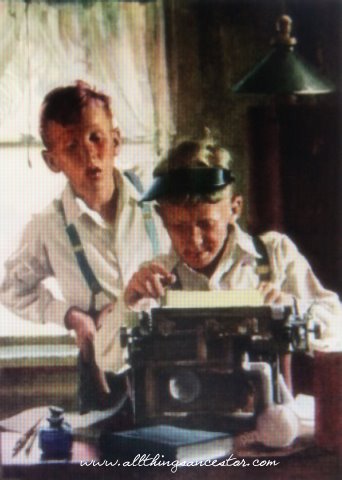
- Nothing on any website or on the Internet is necessarily correct. Apply your judgment and common sense to the record or contact the submitter or author of the website for additional comfort about the data.
- Most census information is correct because it was self-reported. That is unless the person reporting did not provide correct information. Census takers often made mistakes based on what they heard versus what they were supposed to hear. Census-taker handwriting varies. Some is beautiful and legible. Some is not. Detective work usually corrects census mistakes.
- Family Trees posted by individuals often have errors. That is because people take information from each other and post it within their family trees without knowing if it is correct or where it came from. Use good judgment and common sense about the research of others.
- Be wary of claims to royalty or fame. Most of the people who have lived and died were ordinary people. If you spend time trying to prove connections to royalty, it is likely that you will miss the real stories of your ancestors lives.
- Use simple spiral notebooks to keep your notes as you research. When you have filled a notebook, write the date range for it and file it. If your notebook contains the research for one surname, file it alphabetically.
- You can print many types of forms from the Internet, free-of-charge. For example, you can print Research Log Forms from Ancestry.com at no charge. I like this format. I simply print a few and three-hole punch them at the top so that they are in a landscape format. It is easy to lay the binder flat and use the research forms.
- If you find that someone in your family has information you might want or need, offer to go to them. If they don’t want to part with a photograph or document, offer to drive them to the closest store which makes copies. If someone does let you borrow some of their records or photographs, return them promptly. Not weeks, but days. Hours are better. They will be likely to help you again if they trust that you will be careful with their records.
- STAY ORGANIZED. Put things away as you gather them and label them clearly.
- Truth is stranger than fiction. Whomever said that was right. Worry about what you find later. Don’t get sidetracked until you have laid the foundation for each person.
- More extended family members attend funerals than weddings. Always take a camera with you. Take photographs of the faces you do not have in your records. Ask who people are if you don’t know them.
- Don’t become discouraged. There will be people in your families who will NOT want to help you. Come back to them later and see if their hearts have softened.
- TAKE A CAMERA WITH YOU WHENEVER YOU VISIT A FAMILY MEMBER. KEEP A DISPOSABLE CAMERA IN YOUR CAR GLOVE BOX.
- Do not assume that your ancestors rest in marked graves. Find their graves. In each record note where the person is buried and whether the grave is marked. Many families simply could not afford to mark their loved ones’ graves.
- ON A QUIET SUNDAY AFTERNOON, PULL OUT ALL OF YOUR PHOTOGRAPHS AND WRITE NAMES, DATES AND PLACES ON THE BACK OF EACH. THERE WILL ACTUALLY COME A TIME WHEN YOU WILL NOT KNOW WHICH OF YOUR CHILDREN, AS A BABY, YOU ARE LOOKING AT OR WHEN YOU WENT TO A PARTICULAR PARK!
- BELIEVE, WHEN YOU BEGIN THAT YOU WILL FIND WHAT YOU ARE LOOKING FOR. IF YOU DON’T FIND IT RIGHT AWAY, KNOW THAT EVENTUALLY YOU WILL.
- Write on EVERY photograph, document and paper.
- Create and MAINTAIN your filing system.
- Print out and make copies of everything. Discard later.
- BE STEADY.
REMEMBER: The longer you wait to begin the process of looking for your ancestors, the further their information recedes into the past. Start now.
Here is an example of the first letter we used to gather information from our living, extended family. It was sent to uncles, aunts, siblings and cousins.
Date
Dear Family Members:
We are working to create a family history record for ourselves and our posterity. We would like our record to begin in the present day and be current with all living family members as well as those who are deceased. As we put it together, those in all of the connected families will benefit. We know that it is important to take advantage of information in the possession of living family members and so, we welcome anything you can share with us including photographs, biographies, autobiographies, vital records and existing family group and pedigree records. We also welcome telephone calls and discussions which might pass along oral history about members of our families.
Attached is a blank Family Group Record form. Would you be willing to complete it for your immediate family and return it to us along with a photograph of your family group or individual photographs of each member? Simple photocopies will work just fine for both photographs and documents.
When we have compiled our record, we will be happy to share it with you.
Thank you for your interest in this effort and for your help.
With love,
Signature
Attachment (Family Group Record Form)
We waited three months to receive replies or information and then sent a second letter as follows:
Date
Dear Family Members:
We are making one more effort to complete our Family History File to include vital statistics and representative photographs of each living person connected to our direct lines. Please review the enclosed report and fill in the blanks if you are interested. The highlighted lines indicate that vital information is absent from the file.
We welcome simple color copies of photograph of each person in your family group which we can scan into each individual record. You may put many faces on a page and copy them if you would like. We will scan them into the computer from your copies or you can send photographs as well.
We have enjoyed creating this history for posterity which we hope will be of benefit to many family lines and wish to make one more effort to complete this project.
Thank you for your help in the past and for your contribution to the future record.
With love,
Signature
Name, address, phone number and email address
WHY?
Nothing is more helpful to me that the use of chronologies and time lines. Not commercial time lines, but those I create myself as I find each piece of information about an ancestor. While the process of gathering information about our ancestors may last a lifetime, in the beginning we may find that when we try to put an ancestor in “place and time” we can’t keep all of the information we have found in our minds. By creating our ancestor’s life chronologically and keeping that chronology handy, we can see what information we have and what we are missing. Chronologies or time lines help us to document migrations, the births and deaths of family members, professional careers and second marriages. A chronology, beginning with a birth is the easiest way to eventually compile a history of a person. When we combine the individual chronologies of family members we can more easily put together the history of a family group.
HOW?
You can create a chronology many different ways. You can begin by simply writing your ancestor’s name at the top of a piece of paper and adding dates and places as you find them. List the dates on the left side of the paper and the information you have found on the right. If you are comfortable using a computer it is very effective to use a simple spread sheet program to do this because then you can re-sort the dates/entries as you add a new one so that the computer does the work. Since you may find that several things happened in the life of your ancestor in the same year, the computer approach which allows for easy sorting will make that fact easier.
In the beginning, the chronology can be brief. Start by writing your own time line or chronology to see what types of information you might want in each of your ancestors’ chronologies.
WHAT?
Here is an easy way to start:
- Buy a three ring standard- size binder
- Buy a set of alphabet dividers
- Buy a package of lined paper
- At the top of each page, write the name of the ancestor you are researching
- As you find a piece of information, such as birth, death, education etc. write the date on the left and the information on the right
EXAMPLES OF WHAT TO INCLUDE IN A TIME LINE:
- birth date, place, hospital
- unusual life events such as illnesses
- schooling: grade school, middle school, high school, college
- professional career
- marriage date and place
- birth of each child: name, date and place
- deaths in the family
- homes where you/ your ancestor lived
- organizations to which you/your ancestor belonged
- milestones in your or your ancestor’s religious life such as ordinations, baptism etc.
- military service
- census entries which show who lived in a family home during particular years, their vocations, education level and the language they speak etc.
REMEMBER:
Chronologies/Time Lines can correct mistakes in your records. They can also help to correct oral history that may be colored by time, bad feelings or lack of information.
Chronologies/Time Lines are the easiest way to keep track of what you have found and what you are missing.
There is a universal language used to record and report Family History. I think that you will find that it is easy to learn and easy to use. In fact, you probably already know some of it because when you make a Pedigree Chart, it looks just like an “outline” . . . the kind of outline that is taught in an English class. Its use eliminates confusion when reading and writing names, dates and places. It makes note-taking fast and accurate. For example, if you talking to someone on the telephone and they start to tell you about a family member and his family, you will be able to write down the information so that you will know exactly what was meant, long after the telephone conversation is over.
Here are the simple, basic rules:
- Write all surnames in capital letters, followed by a comma, the first name and initial. DOE, John R.
- Write all dates in this order: 12 Jan2006
- Abbreviate the month to its first three letters: Jan Feb Mar Apr May Jun Jul Aug Sep Oct Nov Dec
- Use “b” to indicate a birth date
- Use “chr” to indicate a christening date
- Use ” d” to indicate a death date
- Use “mar” to indicate a marriage date
- Use “bur” to indicate a burial date or place
- Use “bap” to indicate a baptism date
- Use a “+” when indicating a spouse on a pedigree chart
- Use “sp” to indicate a spouse when taking or sharing notes
- Use numbers beginning with “1” to record children in their birth order, oldest first to youngest
- Write places in this order: City, County, State. Smallest jurisdiction to largest.
- If your place has a township AND a county, write the City, Township, County, State
- You do not need to use the word “County” after a county name
- You do not need to use United States the names of states
- Separate City, County and State by commas. If you do not know one or more of the places, use a comma to indicate that you do not know. Draper, , Utah. This example means that you do not know the county. , Salt Lake, Utah means that you do not know the city. Draper, Salt Lake, , means that you do not know the state.
- DO NOT ABBREVIATE STATES OR COUNTRIES ! Connecticut is not CT. Vermont is not VT. Utah is not UT. When you consider the many differences in handwriting from one person to another, it is easy to see how these abbreviations, CT, VT, UT can be easily misunderstood . . . especially VT and UT. Places are important. Write them out completely.
- Use <brackets> to indicate that a piece of information you have included in your record might not be correct but you want to leave it there until you know for certain. I use brackets to indicate my questions for names, dates and places. Using brackets also helps me to review where I need to spend more time.
- Women should always be entered onto your records using their maiden names. They will eventually appear in the following records with their married names: Social Security Death Index, Census Records, Burial Records and Obituaries.