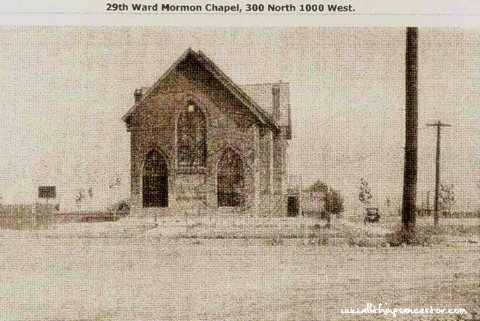
I have always loved this church. It was built on a corner just one half block from the home where I lived when I was born and where I lived until I was almost five. It was called the 29th Ward. When the Salt Lake valley was first settled, The Church of Jesus Christ of Latter-Day-Saints divided its congregations geographically by “wards”. The First Ward and the Second Ward began the pattern of naming the areas until it seemed prudent to use other names to describe the congregations. This ward was built about 1900. It was ten blocks west of Temple Square and three blocks north. Temple Square provided the starting place for all numbering of the grid on which the city was laid out. When the chapel was built, there was only farms around it. Gradually, homes were built here and there, primarily through the 1930s and 1940s.
In 1949, which was the year I was born, homes were on all streets surrounding the chapel. And, an entry way had been added under the middle stained-glass window. By the time I attended the church and formed a memory of it, cement steps had been added to the front, which led into a double door which provided some protection from the elements and kept people from walking directly into the chapel. Of course the church eventually was surrounded by trees though there was little grass. Originally there was no parking because people walked most of the time. As the population grew, also in 1949, the 29th Ward was divided and another ward was formed. This event was on the agenda for that session of General Conference. The new ward was called the Riverside Ward in the Riverside Stake.
The church had a basement which actually had windows that were quite far out of the ground. They were big enough to let in lots of light. In the lower level were classrooms and a large recreation room for the Primary children. This chapel had another unique feature. It had a balcony. One could either sit in the wooden pews or walk up stairs at either side of the chapel at the back and sit in the balcony. There were only four rows of benches in the balcony, but it was somewhat circular and very interesting.
In back of the chapel was an area with a wooden floor and a stage. That is where dinners and plays were held. It was too small for a gymnasium.
When Justin Gerald Pugmire died in 1949, his funeral was held in this, the 29th Ward. When his wife Clara Lzina Barker Pugmire died in 1969, her funeral was held in this same building which was then called the Riverside Ward.
Sometime in the 1970s, the building was sold by The Church of Jesus Christ of Latter-Day-Saints and a new, more modern building was built just a block away. The building still stands but has had many owners and many uses. It is no longer a church for any denomination and is in disrepair.
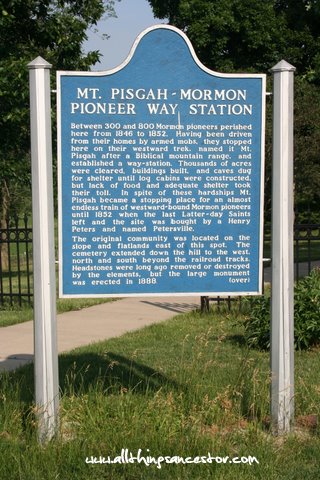
There are so many tragedies related to the early days of The Church of Jesus Christ of Latter-Day-Saints. One such tragedy occured at a place called Mt. Pisgah, which is a name from the Old Testament. Here, the Saints were camped by the hundreds awaiting the time when they would move on to The Valley of the Great Salt Lake. Our ancestor Ithamer Thomas Sprague left the camp with other men in search of food. While they were gone, a mob attacked the women and children who were left behind. Many were killed and injured including, among the dead, Ithamer’s wife Betsy and his five children.
The resting place of those who died there is not accessible and is not formally marked. However, an original cabin has been restored and preserved and many markers tell the story of what happened there. Mt. Pisgah is a very high mountain for Iowa. It would have been difficult to climb in our ancestor’s time but is still a climb today. One can see why it was desirable to these pioneers because it gave them a view of all that was below. However, on that day, the mobbers met with little resistance.
When our ancestor Ithamer was ready to move on with the Saints, he left his wife and five children in the ground of Mt. Pisgah, Iowa. The woman he married next, Sarah Stedwell, is our direct ancestor. Their daughter Sarah Sprague married Nephi James Bates. Their son with the same name is our direct ancestor.
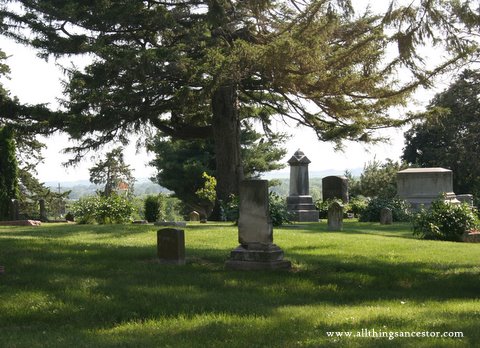
The Evergreen Cemetery in Red Oak, Montgomery County, Iowa
Wayne Watrous was the infant son of Everest Elliott Watrous and Edith Glendora Pancake. He was the second child in a family of four sons. Only two lived to adulthood. Of Earl, Wayne, Everest and Martin, only Earl and Everest survived. Wayne followed brother Earl Pancake Watrous and was followed by a brother Everest Elliott Watrous who is our direct ancestor. The last brother of these four was Martin Watrous, born about 1885 in Utah. He lived under one year as well. Records were very scanty until the turn of the century in Red Oak according to a local researcher. There was a birth and a death notice on file in Red Oak, Iowa for Wayne Watrous, stating that he died of cholera infantum. His birth was also recorded including the birthplaces of his parents and their ages. Although we now know that Wayne was born and died in Red Oak, Iowa, the Evergreen Cemetery, which is the only cemetery in the town, has no record of his burial although local records exist for his death. But we were assured that he was certainly buried there but without a record that could be found. It is a beautiful cemetery, high on a hill overlooking the rural Iowa countryside. Although direct ancestor Everest Elliott Watrous was born after the death of his brother Wayne, when he became a father, he named one of his sons Wayne.
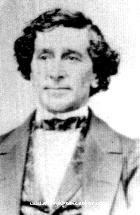
Henry Maiben was born in England to William Adam Maiben and Catherine Williams Cater. He was the fourth child of twelve born to his parents. His Maiben ancestors were originally from Scotland but his father moved from there to Brighton, England before Henry’s birth. Henry and his closest sibling John Bray Maiben were both educated at Oxford College where Henry received a Master of Arts certificate. He spent much of his young life as a heraldic painter which means that he painted coats-of-arms. In 1850, Henry and his brother John heard the message of the missionaries from The Church of Jesus Christ of Latter-Day-Saints. John was baptized by Elder Lorenzo Snow, who would later become the President of the Church. After John was baptized and confirmed by Elder Snow, John baptized his brother Henry. Henry’s confirmation was also by Elder Snow. In 1853 Henry and John, with their young families, left England for America. They were the only members of their family to do so. The rest remained in England. They sailed from Liverpool to New Orleans and then moved on to Keokuk, Iowa. From there they made the trip to the Salt Lake Valley.
In 1855, Henry took Flora Louisa Maddison Long as a second wife. Henry had five children with his first wife Caroline Penn and twelve with his second wife Flora. Flora was born in England as well. She came to America with her mother and two brothers. She was married for less than one year to Emanuel Long with whom she had a son. Henry Maiben raised that son as his own.
Henry was known as a pioneer painter, artist and decorator. He was active in the Salt Lake Theater, wrote music and appeared in plays. He appeared in the opening performance of the same theater in 1862. He is listed in directories of the times holding various jobs including store clerk and custodian for the grounds of the Salt Lake Temple while it was being built. However, Henry did not live to see the Temple completed. Not long before his death, he and a partner named Pyne purchased a drug store in Provo, Utah. They named it Pyne and Maiben Drug Company. It was on Main Street. It was in Provo that our direct ancestor Flora Louise Maiben was born. She married Nephi James Bates. Our line comes through their daughter Mildred who married Everest Raymond Watrous.
Henry died unexpectedly of pneumonia and was buried in the Salt Lake City Cemetery. Resting with him in death are both of his wives and significant posterity. He remained a faithful member of the Church until his death.
The migration of Henry Maiben
England to Utah
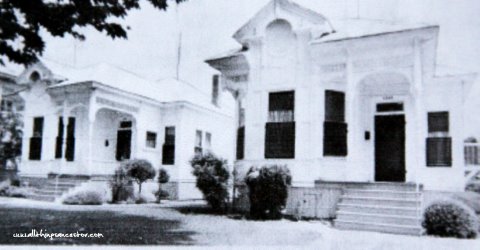
Elsewhere on this website is information about the owners of these two Victorian homes. In 1910, William Franklin McVey had them built for his daughters Maude McVey Mount and Pansy McVey Burke. They sit side by side in Fresno, California. Maude and Pansy McVey were first cousins of direct ancestor Everest Elliott Watrous. Their mother was Ophelia Pancake McVey, sister of Edith Glendora Pancake Watrous who is our direct ancestor and wife of Henry Reynolds Watrous.
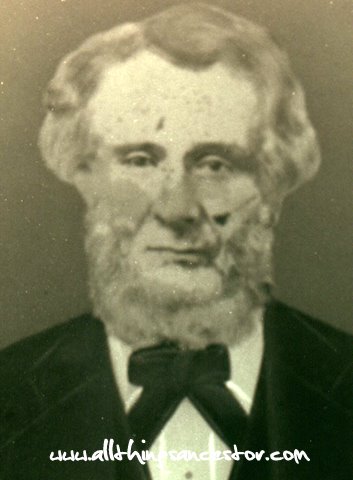
Ithamer Thomas Sprague was born in New York to Hezikiah Sprague and Abigail Jeffers. He was the eighth child of eleven born to his parents. Ithamer is an unusual name. It was the name of one of the sons of Aaron, who was charged with administering the rites of the Temple in the days of Moses. Ithamer, along with his aged parents heard the missionaries from The Church of Jesus Christ of Latter-Day-Saints. Ithamer and his wife Elizabeth Goodner, known as Betsy, were baptized members of the church in 1840. While gathered with the Saints in Nauvoo, Illinois Ithamer owned and operated a boat on the Mississippi River. He sold that enterprise and became a blacksmith. Ithamer and his family left Nauvoo, Illinois as the persecutions increased and moved with a large group of Saints to Mt. Pisgah, Iowa prior to their full migration to Utah. While in Mt. Pisgah, the men left the came to hunt for food and while they were gone the mobbers came into the camp of several hundred women and children. Ithamer’s wife Elizabeth and their five children were among many who were killed. A commemorative park is on the spot where this tragedy took place. Unbelievably, Ithamer moved on with his widowed sister and his parents. His mother Abigail died at Winter Quarters in Florence, Nebraska. He continued on and arrived in The Salt Lake Valley in October of 1847. His father Hezikiah died in 1848, after only a few months in the valley. In 1848 he married direct ancestor Sarah Stedwell Wood Brown, whose story is interesting in its own right. Their daughter Sarah Sprague who married Nephi James Bates is our direct ancestor. They settled in the Brownsville Fort Region on the Weber River in Weber County, Utah. Ithamer and Sarah eventually divorced.
Ithamer and Elizabeth Goodner were the parents of five children. Ithamer and Sarah Stedwell were the parents of five children as well. In 1873, Ithamer married Mary Elizabeth Prince. They became the parents of four children. Ithamer and his family settled in the town of Bunkerville, Nevada where they were one of only a few communities which successfully lived the United Order. That means that they, as a community of Saints had all things in common. When Ithamer died, he was buried in the Bunkerville City Cemetery where two national historic plaques have been placed to recognize the accomplishments of the community and their contribution to the cotton industry. Cotton was their primary crop.
Ithamer and his father Hezikiah received their Patriarchal Blessings at the hand of the Patriarch Hyrum Smith, brother of the Prophet Joseph Smith.
This portrait of Ithamer hangs in the Daughters of the Utah Pioneers Museum in St. George, Washington County, Utah.
The migration of Ithamer Thomas Sprague
New York to Illinois to Iowa to Utah to Nevada
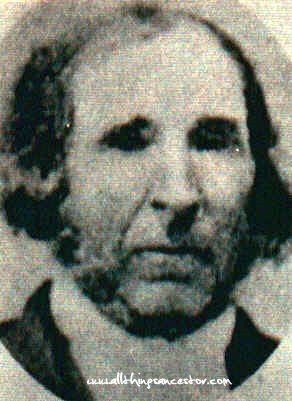
James Jenkins was the second child and first son born to his parents Thomas Jenkins and Mary Thomas in Wales. His older sister was named Harriett and his younger brother was named John. Nothing is known of his childhood. In 1842 he married Elizabeth Davis in Wales. In 1847 they heard the message of the missionaries of The Church of Jesus Christ of Latter-Day-Saints and were baptized. In 1854, the family emigrated to America after boarding their ship in Liverpool, England and sailing six weeks before reaching America. From their landing in New Orleans, they traveled to St. Louis where they outfitted for the trek west to the Salt Lake Valley.
James built the first log cabin west of the Jordan River in a place that is now an small airport. To earn a living, James felled trees with an ax, loaded the wood in his wagon and sold it. The family’s first year in the valley was bleak. Flour was so scarce that they and others were forced to live on roots. The next year, after the crops were planted and hope was alive, the infamous event known as the Miracle of Gulls took place. Crickets swarmed in black clouds and began to devour the Saints’ precious crop. After all efforts to kill and chase them failed, their prayers were answered. First-hand accounts say that black swarms appeared again and the Saints thought that more crickets were coming. Instead, seagulls swooped down and began to devour the crickets. The birds filled their bellies and then flew to the nearby lake where they regurgitated the bugs and returned for more. Most interesting is the fact that seagulls do not eat crickets . . . normally.
James is buried in the Pleasant Green Cemetery in what is now the town of Magna, Utah. He is next to his son John and surrounded by his posterity. His wife Elizabeth is buried in the Salt Lake City Cemetery but why, we do not know.
The migration of James Jenkins
Wales to Utah
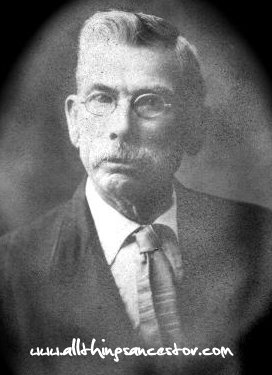
John Jenkins was born in Wales to James Jenkins and Elizabeth Davis. He was the middle child of three, an older sister and a younger brother. John’s parents heard the Gospel from the missionaries of The Church of Jesus Christ of Latter-Day-Saints and were baptized in 1847. Speaking only Welsh, they were taught and baptized without the benefit of reading The Book of Mormon in their native language for it had not yet been translated into Welsh.
John and his family made the voyage across the ocean and the trek across the country, arriving in The Salt Lake Valley in 1854. His father bought a farm in West Jordan, Utah which was deeded to him after working it for five years. That was the custom at the time. In 1870, John married Rosella Newberry Morris Peck. Rosella had been briefly married to Lucius Peck, but that marriage was dissolved shortly after it began. John and Rosella became the parents of seven children. The sixth child, Mary Maria is our direct ancestor by her marriage to Everest Elliott Watrous. John and Rosella made their home in Pleasant Green, Utah which is today named Magna. John spoke only Welsh. When he married Rosella, she, a teacher, was able to help John to learn the English language. He was a poet and learned to write in English.
First, John built a two-room adobe home in Pleasant Green with clay from the Perkins Clay Pits. Later he built a more permanent home which was called Arbor Park. In the year of 2009, the last remnants of his original home were removed and a large office building was placed on the land. Prior to the demolition we were able to walk the land and take photographs of the home. Coupled with a photograph of the original home when John was a young man, we are able to see the passage of time.
John was a significant land owner in Pleasant Green. He bought property in 1872, 1878, 1883 and 1886. He was a farmer and stockman. He kept sheep and cattle on ranges outside of the town. In his later years he developed palsy which made it hard for him to complete small tasks. When he died, he was buried in the Pleasant Green Cemetery which sits atop a hill on property owned by the Kennecott Copper Company. The cemetery cannot be seen from below but must be found by driving a steep and winding road. Once on top of the mountain, one can see the entire Salt Lake Valley and The Great Salt Lake to the north. John is buried with his wife Rosella and his father James. For some reason his mother Elizabeth is buried in the Salt Lake City Cemetery. Many of John and Rosella’s posterity are buried in the same cemetery. Some are in the family plot and others in plots throughout the cemetery.
The migration of John Jenkins
Wales to Utah
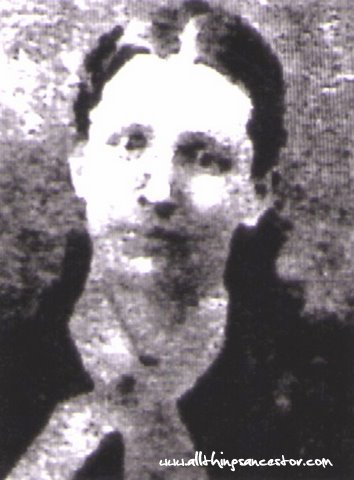
Jane Pickett was born in England to George Pickett and Maria Jarvis. She was the youngest of three children, the others being Mary and James. Two years before Jane’s birth, her parents heard the message of the Gospel from the missionaries of The Church of Jesus Christ of Latter-Day-Saints and were baptized. When Jane was just three, her mother Maria Jarvis Pickett died. When she was five, Jane’s father married Priscilla Clark. She was also a convert to the Mormon Church. In 1855, Jane set sail for America in the company of her father, his new wife Priscilla, Priscilla and George’ baby daughter Louise, her brother James and her sister Mary and her father’s two brothers William and Mathew and their families.
They docked in St. Louis where Jane’s father George contracted small pox and died. Jane’s uncle William and his wife Mary cared for their brother’s children Mary, James and Jane. That fact, written in Jane’s autobiography does not explain where their step-mother was at this time. Jane and her siblings remained in St. Louis for two more years, arriving with their father’s brother in Utah in 1861. They lived first in Tooele, Utah where Uncle William had a large farm. The same year of arrival in Utah, Jane’s sister Mary died and the following year her brother James died. Jane was thus the only surviving member of her immediate family. When Priscilla Clark Pickett arrived in Utah she married again. When her daughter Louise was just twelve years of age, Priscilla was murdered in Carson City, Nevada. Jane tells us that she did not know her half-sister very well.
At the age of eighteen, Jane met John Thompson Barker at a church dance. After a lengthy courtship they were married in the Endowment House in Salt Lake City and eventually settled in the Bear Lake Valley in the town of St. Charles, Idaho. Jane and John were the parents of eleven children. The youngest, Clara Lzina Barker Pugmire is our direct ancestor. She married Justin Gerald Pugmire in Paris, Idaho. Jane is buried with her husband John in the St. Charles City Cemetery, St. Charles, Idaho.
The migration of Jane Pickett Barker
England to Missouri to Utah to Idaho