Artifacts and Keepsakes
2010
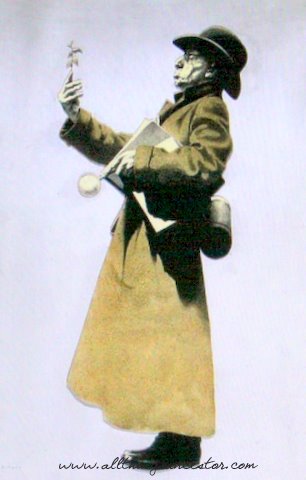
Most of the time we associate the word “artifact” with archeology. The definition is “a handmade object; such as a tool, or the remains of one, characteristic of an earlier time or cultural stage.” So, it would seem that our ancestors left artifacts behind without being prehistoric themselves. The emphasis in the definition is on that which was made by human hands. Artifacts which belonged to our ancestors which might be called “keepsakes” include clothing, tools, collections, art, leather, hinges, saddles and bridles, pots and pans, pottery, looms, sewing implements and a myriad of other things. A child of today might think of his grandfather’s manual typewriter as an artifact. It is. As this generation’s use of technology increases, the typewriter will be an old machine from an earlier time. Artifact and keepsake. Preserving the items that our ancestors used is a way of preserving the past and enlarging future generations’ view of that past.
Other examples to keep in mind are:
- Family Bibles
- Family Journals
- Sewing Implements such as thimbles and needles
- Furniture which was often handmade in earlier times
- Working tools: vice, hoe, rake, ax
- Kitchen tools: knives, bowls, pans
- Jewelry
- Lace, clothing, quilts, blankets
- Chests and anything carved or made from native woods in the area where the ancestors lived
- Things fashioned from various metals
- Anything no longer in common use
- Anything with an ancestor’s handwriting
- Painted portraits
- Compass
- Magnifying glass
- Eye glasses
- Hats
Here is one of the problems we all face when deciding what is an artifact and then, which artifacts qualify as keepsakes. Not everything can be kept. Some people find ways to display their keepsakes while others carefully store them away. It really doesn’t matter. What matters is to recognize the importance of saving a few keepsakes from ancestors which will remind us and our posterity about them and preserve the history of the time in which they lived. Not everything old from our ancestors’ lives is an artifact. Not all artifacts or belongings of an ancestor are keepsakes. Every generation will be different. Clothing and paper require some clever preservation techniques. Metal and leather will be fine unless the mice find the leather and water finds the metal. Portraits and art may be wonderful keepsakes but not necessarily the kind we want to hang in our home. Nevertheless, we want to be able to pull them out now and then and talk about them, especially if we remember the art or portraits hanging in an ancestor’s home.
Early ancestral Wills listed the property of the deceased. I have always thought that a Will was a good indicator of what was important and valued in the time when the ancestor lived. A feather bed. A pewter cup. A particular horse. A wagon. Land by a stream. A pocket watch. A gun. A knife.
Never give up. Unless the artifacts disappeared into thin air, which little can, they are still somewhere. I keep looking and asking. Meanwhile I give some thought to those things I treasure, which I have made with my own hands. Perhaps some of them will be tomorrow’s artifacts and keepsakes in the eyes of my posterity.