The Lives They Left Behind
Few things touched me as deeply as an article which was carried by Newsweek Magazine and hundreds of similar publications. I cut it out originally in 2004. Recently it was re-run. Deeply engrossed in finding my own ancestors, I realized how important this undertaking was and how even the smallest token of a life keeps it from being forgotten. I have since bought the book itself and wanted to include this story on my website to remind us all that we have people to find and people to redeem.
“Suitcases of Mental Patients Tell History” Wednesday, September 1, 2010
by Tina Calabro
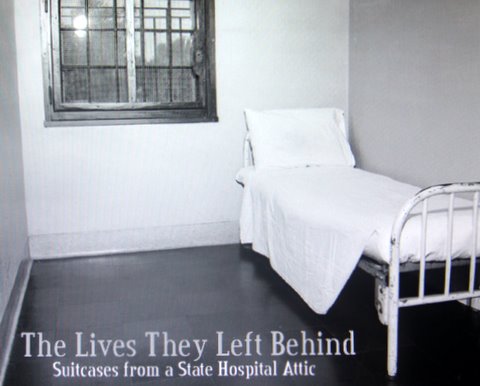
Up until the 1970s, it wasn’t unusual to know someone — or know of someone — who had been committed to a state mental hospital. Mental hospitals, which had evolved from 19th century “insane asylums”, were remote and typically dreary institutions where patients were sent for psychiatric treatment. In tens of thousands of instances across the nation over more than a century, these hospitals became custodians of patients who lived out their lives there.
By the early 1970s, advocates for the rights of people with psychiatric disabilities were fighting for an end to “putting people away”. They campaigned for changes in law and policy that would stop the warehousing of patients and ensure appropriate treatment and services within communities.
These advocates were successful. Paradigm, policy and practice changed. Large-scale institutions across the nation began to close.
In 1998, Darby Penney, an advocate for the rights of people with psychiatric disabilities, came face to face with this history.
Ms. Penney, who worked as director of recipient affairs for the New York State Office of Mental Health, was sitting in a routine work meeting when she heard about the discovery of 400 suitcases filled with the belongings of former patients at Willard Psychiatric Center, which had closed three years earlier. The institution, built in 1869 in Seneca County in the Finger Lakes region, had been one of the largest in the state. In its 126 years of operation, Willard had housed 120,000 patients.
Ms. Penney was fascinated by this “piece of hidden history.” She went to the place where the suitcases were stored and started looking. “I was amazed at the depth and extent of what was there. Whole lives were in those suitcases.”
Although not trained as an exhibit curator, Ms. Darby — together with Peter Stastny, a psychiatrist and documentary filmmaker, and Lisa Rinzler, a photographer — spent the next six years researching and documenting the people connected to the suitcases. They studied their personal belongings and conducted interviews with people who had known them, including former Willard employees.
The result was a museum exhibit, “The Lives They Left Behind: Suitcases from a State Hospital Attic,” which drew 600,00 visitors during its nine-month run at the New York State Museum in 2004. A book with the same title was published in 2008.
A traveling exhibit continues to appear in American cities. The exhibit, say its organizers, honors the memory of forgotten people who “disappeared for decades behind the institution’s walls.”
Many of the stories tell of people who led rather ordinary lives before their commitment — they were educated, raised families, had skills and held jobs. In most cases, hardship, poverty, ill health, peculiar beliefs, or lack of family ties led to long-term institutionalization.
The suitcases revealed that some of the patients longed to leave the institution until the day they died. Others did not want to leave; the institution had become their home.
The owners of the suitcases had diagnoses such as schizophrenia, epilepsy and depression, yet records show that their care was more custodial than treatment-oriented. As Willard’s population grew to an all-time high in 1950, the institution relied heavily on the labor of its patients to maintain its farm, buildings and grounds. One of the patients profiled in the exhibit was the hospital’s main handyman.
Reaction to the inaugural exhibit was intense. “People were riveted,” Ms. Penney said. “They expressed a lot of strong emotions. They would even start conversations with strangers standing beside them about what they were seeing.”
The Willard suitcases provide a rare glimpse into an unsettling piece of American social history and also raise difficult questions. End
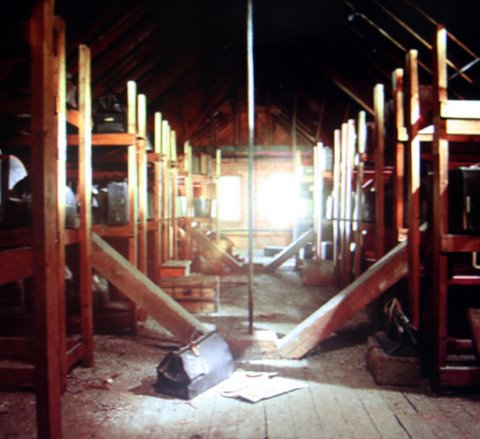
Pursuing family history today includes a longing to find just such suitcases. Not in mental institutions but in general. What a labor of love it was for those involved to reconstruct the lives of those whose suitcases had been stored away, consigning all of their personal belongings, photographs and keepsakes to a dark attic — never to be seen again by the inmates of the institution. Perhaps in those 400 suitcases were people who had been lost from their families who are now found. At least, they are remembered outside of the walls which held them in.